
Psychoactive use of Cannabis

One of the first records in history corresponds to a period between 500 and 800 BCE, they are the oldest evidence on the psychoactive use of cannabis to date. In ceremonial burials in the Turpan Plateau and in the Pamir Valley, on the Chinese borders with Mongolia and Pakistan, cannabis residues were found with other objects related to its consumption as a narcotic (Vázquez Felipe, 2021).

Artifact (Pipe, Burner) for Dried Herbs with THC Residue, BC, Source:
It is believed that in medieval times, the Knights Templar used Cannabis to go into battle. Escohotado, A. 1998, Historia general de las drogas.

Today, as with alcohol and other substances, some people choose cannabis in different contexts, some use it for better sleep, stress management, or concentration, while others use it for socializing and fun. Some activities such as listening to music, eating, playing, reflecting, may be more interesting under the cognitive state generated by Cannabis (Gonzales et al 2017).
Many countries have legalized the medicinal and industrial use of Cannabis/Hemp and others have taken a next step towards the legalization of adult or recreational use, as it is known in different regions, promoting and allowing Self-cultivation. Self-cultivation, at an international level, is known as the freedom or permission that users or consumers have to sow and/or produce a certain number of plants and flowers at home or in private spaces. Each country has its own regulation, below are some of the countries that allow Self-Cultivation and some of their conditions:
Table 1. Self-cultivation in some countries.

Source: Own elaboration 2025
Some general conditions that countries have in common are:
· Self-cultivation is only for adults according to state regulations.
· Self-cultivation should be located in private, inconspicuous places.
· The place must not be exposed to Kids.
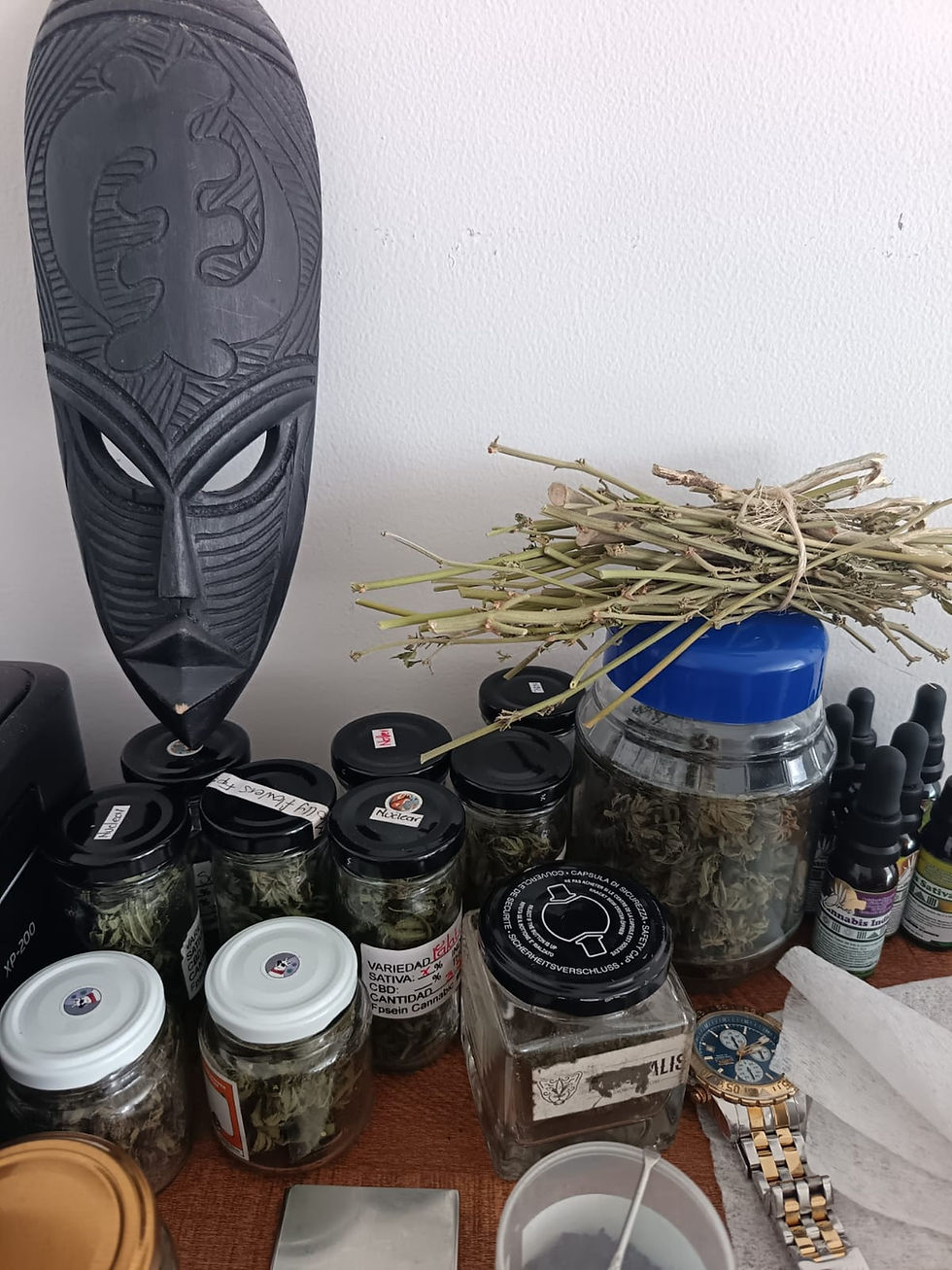
In Colombia, self-cultivation is legal according to Dec. 811 of 2021, the planting of up to 20 plants for personal use is allowed. Self-cultivation is a form of Urban Agriculture, its main objective is the flower production for growing communities in cities or urban areas.

In cities such as Bogotá, there are already communities of users who manage their supply and responsible use of Psychoactive Cannabis, in a community way, with traceability and with a preventive approach to public health, however, the only regulation in force authorizes the planting and production of 20 plants for personal use, prohibited for commercial purposes. It is estimated that in Bogota alone there may be about 450 thousand Cannabis users (Taking into account the 2022 study, Ministry of Health Bogota and UN). Self-cultivation as a source of its own supply, is gaining importance, especially thanks to the quality and traceability of flowers that can be obtained compared to flowers from the informal market, where there are no real guarantees or controls of any kind, only the word of the dealer or supplier, some good others bad as everything, some trying to establish quality protocols, traceability, internal control and other components, but everything is still illegal.
The consumption of Cannabis in public spaces in Colombia is practically prohibited, the police can act according to their criteria on the regulations, the consumption at home which is allowed can generate problem of coexistence with neighbors and community. Will this be the time for Clubs, cultural houses and concerted spaces for responsible consumption? and most critically, how to prevent this type of community models from being contaminated by micro-trafficking?
It is important to remember that the consumption of Cannabis can also cause health problems, as can cigarettes, alcohol or other psychoactive substances.
Gus Garzón. I.A , MBA, PhDc