
Intercropping, in sustainable agriculture
Updated: Feb 27
What are intercropping?
Intercropping is an agricultural technique that involves planting two or more species on the same land at the same time. Unlike monoculture, this system seeks to make better use of soil, water and sunlight resources through complementarity between plants.
It is not something new, it is a traditional practice that today is gaining relevance again within sustainable and regenerative agriculture.

Intercropping Yuca-Maíz. Sur del Lago Maracaibo, Venezuela 2008
Why is intercropping trending again?
Interest in companion crops has grown for three key reasons:
Increased demand for sustainable production
Need to diversify farm income
Adaptation to climate change
In tropical countries such as Colombia, this technique is especially valuable because of the climatic diversity and the availability of complementary crops.
Benefits of intercropping
1. Better Land Use
The roots of different species occupy different levels, which improves the efficiency in nutrient absorption.
2. Reduction of pests and diseases
Plant diversity hinders the proliferation of pests, reducing the use of agrochemicals.
3. Increased climate resilience
If one crop fails, the other can compensate for the loss, reducing the productive risk.
4. Increase in biodiversity
Diversified systems favor microorganisms, pollinators, and soil health.
5. More income per hectare
Although individual performance may be lower, total combined performance is usually increased.
Examples of intercropping in tropical systems
Some common combinations in Latin America:
Corn + beans (traditional milpa system)
Cassava + legumes
Cocoa + banana (productive shade)
Medical cannabis + aromatic (in agroecological systems)
These partnerships allow for staggered production cycles and better cash flow.

Yariguíes Farm, Agroforestry, Intercropping, Timber, Cocoa, Banana. Source: Hincapié, O (2022). National Chocolates. Grupo Nutresa, Santander, Colombia.
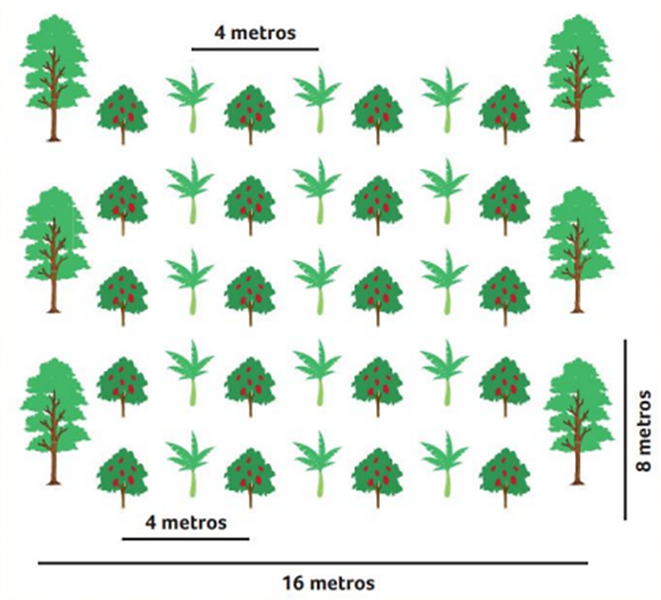
Source: Hincapié, O (2022). National Chocolates. Grupo Nutresa
How to apply intercropping correctly?
To successfully implement intercropping, consider:
✔ Compatibility between species
Avoid crops that compete strongly for the same nutrients.
✔ Different root depths
This maximizes land utilization.
✔ Complementary production cycles
Ideally, it combines short-cycle crops with long-cycle crops.
✔ Proper technical handling
It includes planting planning, differentiated fertilization and integrated pest management.
Intercropping in Colombia: A Strategic Opportunity
Colombia has clear competitive advantages:
Climate diversity all year round
Tradition of peasant polycultures
Growth of sustainable markets
Interest in Regenerative Agriculture
Intercropping can be key for small and medium-sized producers looking for greater profitability with less environmental impact.

Intercropping Yuca Maíz, Corozal, Colombia 2007
Is intercropping profitable?
Studies show that intercropping systems can increase land-use efficiency (Land Equivalent Ratio > 1), which means higher combined productivity compared to monoculture.
In addition, it reduces costs by:
Agro-inputs
Pest Control
Fertilization
Conclusion
Intercropping represents a powerful strategy to move towards a more sustainable, resilient and profitable agriculture. By combining biodiversity with technical planning, intercropping is positioned as a real alternative to intensive agricultural models.
For producers in Colombia and Latin America, adopting this practice can mean not only better yields, but also greater economic and environmental stability in the long term. Visit us cassabis.org and check our experience on sustainable agribusiness.

Comments